Why Veterans Day Is Meaningful To Me

Today is Veterans Day! It’s been a while since I’ve written a blog post, so this is a perfect prompt for me ^^; That is not the only reason I wish to write this post. I want to share the reason why I like Veterans Day. In 2008, my Uncle Ricky died from a bomb explosion while serving in Iraq. He was only 23 years old, which is crazy for me to think since I’m only two years away from being 23 myself. Because of that, I revered people who served in the military. However, I didn’t think that deeply on the importance of what they do. It wasn’t until I became old enough to vote that I began thinking deeper on what it means to protect a country. Since it is Veterans Day, I feel like it is a good opportunity to share my thoughts regarding the military.

This is my Uncle Ricky ❤

I always loved days like Mother’s Day, Father’s Day, Valentines Day, National Sons and Daughters Day, etc. They all have one thing in common that I adore: honoring another person. On Mother’s Day and Father’s Day, we honor our parents. On Valentines Day, people honor his or her romantic partner. On National Sons and Daughters Day, parents honor their children. Honoring another person is a very Biblical thing to do. 1 Thessalonians 5:12-13 (NIV) says: “Now we ask you, brothers and sisters, to acknowledge those who work hard among you, who care for you in the Lord and who admonish you. Hold them in the highest regard in love because of their work. Live in peace with each other.”

We see so many people dishonor others. We see this with Cancel Culture. We see this in political campaigns. We see this with older people despising the youth. Imagine how discouraging this must be to the people who are dishonored, especially if they’re trying to better themselves as people. I know this from experience. I was 13 when I learned about God. I was learning things from the Word and applying it to my life. However, people made me feel like what I thought didn’t mean much. I didn’t feel valued because adults looked down on me since I was only in middle school. It made me even question if God thought I was valid. Dishonoring people is a dangerous thing to do. It creates more problems, not solve them.

I will give another example of this. I feel horrible for people like the actor Kevin Hart. He wanted to host the Oscars, but people took that opportunity away from him because they decided to dishonor a wrong decision he made YEARS ago. He made a joke that was hurtful towards the LGBTQ community. Sure, that’s not a good thing to do, but love is gracious. It forgives offenses like that mean joke. If I were Kevin Hart, I would feel discouraged. I would feel like I can’t get anything I want because a pretentious society says so. Luckily, I have God, who promises to grant our hearts’ desires when we delight in Him (Psalm 37:4). I want to note 2 Corinthians 2:5-8, 10 regarding what Cancel Culture did to Kevin Hart. It’s what God calls the church to do in situations like Kevin Hart’s Oscars case.

I have a reason for bringing up those two examples of dishonoring people. We must understand Honor vs. Dishonor. When we don’t see the destructive nature of the wrong choice, we may fail to realize the importance of the right choice. Likewise, if we don’t understand the constructive nature of the right choice, we may find ourselves doing the wrong choice. When we dishonor our veterans or omit honor for them, it hurts them. It can even lead to them becoming so discouraged, they’ll become unable to see God’s love for them and abandon righteousness. Thankfully this doesn’t always happen, but it can definitely happen. 2 Corinthians 2:5-8 warns us of this.

1 Corinthians 13:5-8 is another verse I think about on Veterans Day. Not only does it say we should not dishonor others; it also says that love always protects. Protecting is what our veterans do. They protect us by serving in the military. They literally protect us with their lives to make sure that our lives don’t have to be afflicted. This is why we honor them, especially on Veterans Day. Veterans work hard to protect. As it says in 1 Corinthians 13:7, to protect is love. As it says in 1 Thessalonians 5:12-13, we must honor those who work hard in love and service.

Romans 13:1-7 talks about the purpose and importance of government. I love this verse because it is loving truth. As corrupt as government can be, God didn’t design it to be corrupt. Yes, He designed it! Now, He doesn’t approve of government leaders to abuse power. Jesus clearly says this Matthew 20:26. You can reflect more on Matthew 20:26 and Romans 13:1-6 on your own. I bring up these verses to emphasize Romans 13:7 in particular. The other verses I brought up is more for context for what I’m about to say. Romans 13:7 says, “Give to everyone what you owe them: If you owe taxes, pay taxes; if revenue, then revenue; if respect, then respect; if honor, then honor.” We owe our veterans honor. Honor is not something that should be done carelessly. Honor is thoughtful, considerate, and shows itself through word and action. Veteran Discounts is an example of honor. So is listening to their stories. So is thanking them with our words, both with the mouth or in an internet post.

I want to end this blog post by encouraging you to be more intentional about gratitude. Gratitude and honor go together, after all. 1 Thessalonians 5:18 says to “give thanks in all circumstances; for this is God’s will for you in Jesus Christ.” Don’t be discouraged if you believe you take things for granted. It happens, and God forgives us when it does. We can stop taking things for granted today and begin practicing thankfulness. Since today is Veterans Day, let us start by thanking our veterans ❤

My Vision: Possible Experience

I just want to let you all know that this blog post will be a longish read. There is just so much to say and I will do my best to summarize my experience. I want to express how much I appreciate the conference, some of the things discussed at the conference, and how it strengthened my faith in Jesus.

One night, I was upset with my parents because I felt like they were not supporting my vision, which is to be a TV show and movie creator. I didn’t feel their support for a number of reasons that I won’t get into. I expressed my frustration with what I perceived as a lack of support, and it led to a conversation that left me feeling hopeless. I prayed to God that He would give me direction. I was so unsure of what my next steps needed to be. I wasn’t even in college (and still not).

Hours later, I’m browsing Facebook. I’m FB friends with a few people I liked in the animation industry. I don’t know these people personally, but I was friends with them as a fan. I come across a post by Butch Hartman, the creator of The Fairly OddParents and Danny Phantom, two cartoons I loved watching when I was younger (heck, they’re both still entertaining in my opinion as someone in my 20s). His post was about a conference being held near the Chicago area called Vision: Possible. It is about taking the next steps towards achieving your dreams.

I saw this post in my Facebook feed on October 7th, 2018.

I was blown away. God answered my prayer so fast and in such an obvious way! I had no clue about Vision: Possible until literally an hour or so asking Him to show me what I need to do. In fact, this was Vision: Possible’s FIRST conference (there’s been 5 more since then). After doing some more research, I felt I had to take advantage of this opportunity. Chicago is so close to where I live and I had friends in Illinois who lived even closer.

After deciding to purchase admission to the conference, I immediately thought of my best friend Maisie Merlock. She is an aspiring and ambitious actress who has been in commercials, short films, and other things. One of her best roles was in a TV show called Chicago Med, where she guest stars as a patient in the episode 8 of season 1. We’ve known each other since high school and is one of my closest friends. She is such a cool and creative person. If you want to support her, consider following her Instagram @ maisie_merlock and her Facebook page Maisie Merlock.

A scene from the Chicago: Med episode Maisie appears in.

Maisie agreed to come with me to the conference, and it was a great experience for both of us. We both learned a lot of things. Before I get into what was said at the conference that taught us and changed us so much, I want to talk a little bit about the speakers who were there.

One of the speakers at the conference is Carly Hartman, who is also the oldest daughter of Butch Hartman, the Hollywood cartoonist I mentioned before. She has a YouTube channel too, and one video I was very entertained by is the one where she attempts to draw her dad’s characters. She has such an inspiring and beautiful heart. She is a very smart person, loves business, and is a gorgeous gal! She has a business profile on Instagram as a Network Marketing Coach @ carlyyhartman. She is 23 years old and is very successful.

Another speaker at the conference is a young man named Nathaniel Spiers. He has a great story about how he became a web designer. He is very intelligent. He was in a sticky situation that led him to needing to hire a lawyer as a teenager, and he did it through teaching himself web designing. His story on how he overcame his obstacles through the grace of God was just awesome! He loves God.

Another speaker at the conference is Julieann Hartman, the wife of Butch Hartman. I was very moved by her passion for God. She is fearless! She is passionate, sweet, and has a strong faith in God. Out of all the speakers I talked to her the most. I told her some tough stuff I was going through and she was so loving. She made me feel like I can overcome any challenge, even the challenges that come with my form of autism. At the conference, she felt the need to tell us that “If Julieann yells at you, she’s not mad at you, she loves you!”

Lastly, the other speaker at the conference is Butch Hartman. I grew up on his cartoons. I love his artwork and sense of humor. He has a huge inspiration in my own cartoons, both drawing wise and storytelling wise. He desires to glorify God through entertainment. I felt like I could relate to his passion because our interests are similar and both our pursuits are dedicated to God.

Left to right: Carly Hartman, Butch Hartman, Julieann Hartman, and Nathaniel Spiers.

Butch Hartman’s vision is to create an entertainment streaming site that is called Oaxis. His mission is to provide quality family-friendly entertainment. Everything that will stream onto Oaxis are shows and movies that have Christian values at the center. I get monthly updates through email, and I am very excited by Oaxis’s progress each time. You can get monthly updates through email, too, by signing up for it at their website here: https://www.oaxis.tv/

Oaxis logo

Carly and Nathaniel were the first speakers to talk on Day 1 of the conference. They talked about not knowing how to get to where they wanted to go and not even knowing what they were doing at first when they started their businesses. This was so encouraging for me as someone who was in the same boat. Since then, I’ve been looking into opportunities to get closer to my vision using the resources I already have, but hearing about how they began their vision journeys made me feel like I could achieve my vision, too.

On Day 1, the speakers used Romans 12 as a key passage in the Bible that many of principles that would be taught at the conference would come from. It stressed the importance of renewing your mind with the Word of God and living out our salvation during our vision journeys. These verses would be referred back to several times throughout the conference, each time being totally relevant. One person who attended the conference praised the speakers for using Bible verses during the conference. He talked about how many Christian conferences don’t actually use Bible verses while discussing the topic of business. He loved that they applied verses to the steps they were teaching. Vision: Possible is the only conference I’ve ever been to, but I just couldn’t believe that Christian conferences would leave out Bible verses when it focused on “secular” things like business. The speakers made it so clear that Christianity has a place in the marketplace. In fact, it is Biblical. I wholeheartedly agree with this. Jesus was a carpenter, after all. Some of His disciples were fishermen, too.

One thing Butch Hartman talked about at the conference was something called an “Elevator Pitch.” The concept is to imagine yourself stuck in an elevator with a famous director for 30 seconds (the example Butch used was Steven Spielberg). The goal is to summarize your vision and its heart in a clear and summarized way, all in a matter of 30 seconds. We even did our own elevator pitches in groups at the conference. The goal is to express your idea and make it sellable in half a minute. Immediately, I wanted to practice making my own elevator pitch and pitch it to Butch Hartman before the end of the conference. On Day 2, I asked him if I could do this during lunchtime, and he said yes, but later. I was nervous at first that it wasn’t going to happen, but spoiler alert: it did happen. And in an unexpected way that I’ll tell you later.

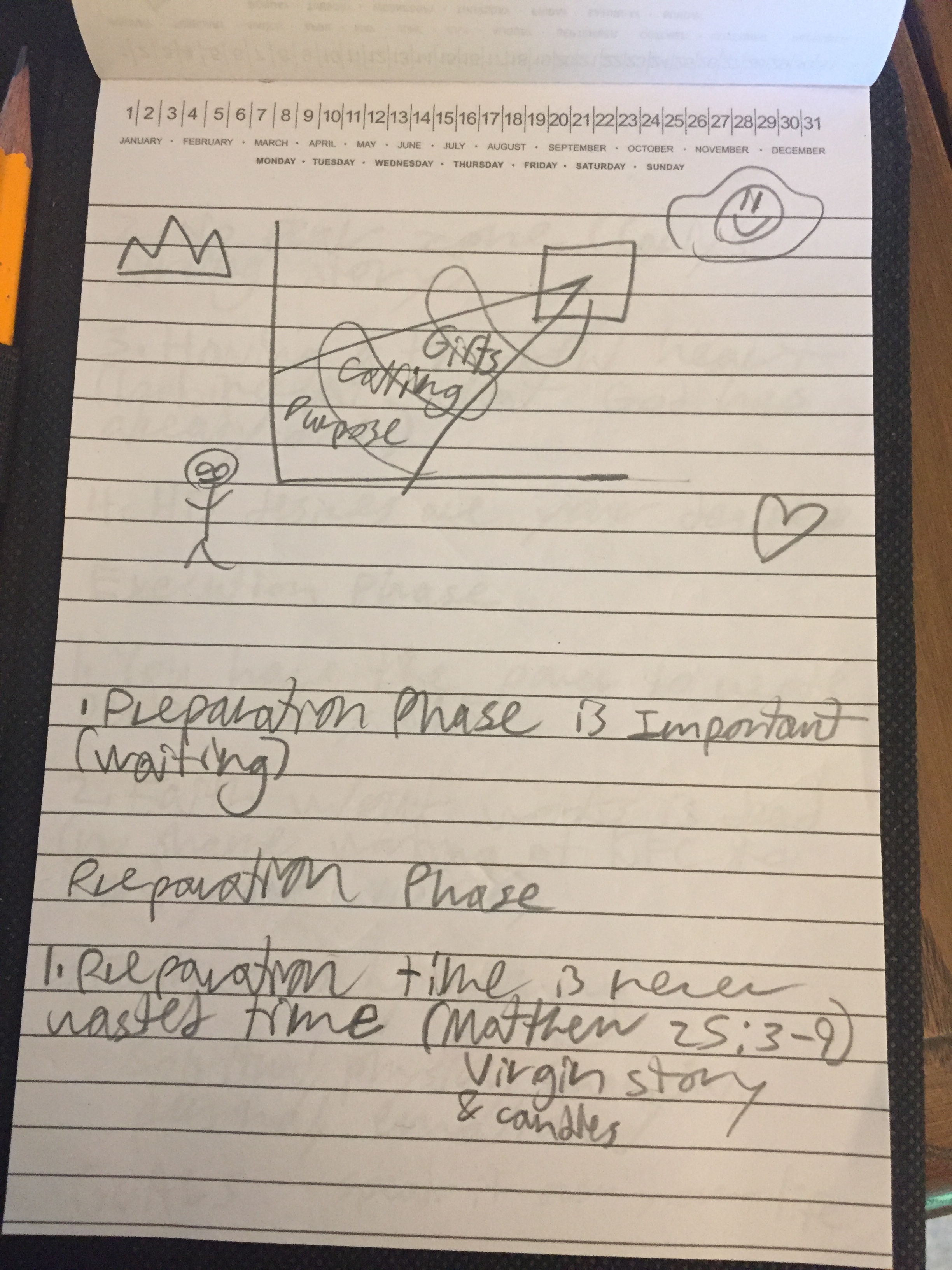
Throughout the conference I took notes in a notepad the conference provided for us. I did my best to note the most key things, especially the ones that stood out to me (I’m not very confident in my note-taking abilities, since I’m tempted to basically write a manuscript of everything that’s being said). Here are 2 pictures:

A page from Day 1
A page from Day 2

I don’t want to get into the specific teachings at the conference. I wouldn’t wanna risk plagiarizing the speakers’ words. However, I will mention some of the things they talk about. They go into things like explaining the importance of networking and how to do it, motivate you to overcome your fears that get in the way of your vision (this was a BIG one for me), the preparation and execution phases of an idea, how to clarify your visions to yourself and others, and so much more! They do it in such a way that I, who is not familiar with the world of business and marketing, can understand. If you do not know where to start, but are passionate about your vision, then this conference is for YOU! It’s motivational, spiritual, packed with wisdom and advice, and so much more.

There is a Facebook page with weekly live videos that conference attenders can view. Butch and Julieann, as well as guests on occasion, will continue giving advice and encouragement. Not only that, they will also ask about your progress. In the live chat, you can ask questions, give brief updates on your vision, and share the glory of God. The page makes me feel like that I am still part of the Vision: Possible family (yes, they call it a family, and I agree). I feel like I’m apart of something bigger than myself. I felt so much purpose from this conference, and the Facebook page helps. I listen to their videos when I can.

At the conference, you can purchase a USB containing audio files of the conference that you can listen to whenever you want. Now, I had to get the audio files through email. Before the speakers can perfect the audio, the 2018 California fire happened, so it was delayed. Eventually, they just had to email the files instead. Either way, you can purchase audio of the conference to listen to after it’s over. I listen to the audio files from time to time, especially while cleaning. I want to praise the Lord right now for keeping the Hartmans’ house safe from the deadly fire! In faith, the family prayed over their home and believed God would protect their home. I know they will continue to bless others through their house.

I also want to mention the founder of The Hope Center, where the first conference was held. Her name is Nichole Marbach. She is a wonderful person who has been healed from Bipolar Disorder and emotional healing from a tragic past. She gave me wonderful gifts as well after the conference was over. They are so meaningful and precious to me.

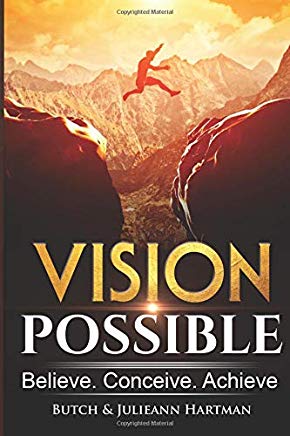
I am still reading the book, and I highly recommend it based on what I’ve read so far.

By the end of the conference, the speakers, Nichole, and my best friend prayed over me. In short, I’m dealing with a lot of struggles because of things going on in my home. It was enough to put college on hold again and move out of the house with my sister. I’m happy that I’m moving out, but not all the reasons are positive. I remember telling Julieann about what I was dealing with at home and the challenges I was facing because of my Asperger Syndrome.

By the end of the conference, the speakers and Nichole prayed over anybody that needed specific prayer. We even prayed for a woman that was in a wheelchair for 25 years that she would be able to walk again. I’ve never seen anyone faith heal before, and I was afraid to watch. My faith was too weak to watch the speakers pray over someone who has been disabled for such a long time. I went into the bathroom, hoping that the prayer would be over by the time I got back.

When I finally returned, all the speakers asked if I was willing to be prayed over. My guess is that Julieann hinted to everyone that I had a situation that needed prayer while I was gone. Even though I was nervous, I let the speakers pray over me. The speakers, and my best friend Maisie, all laid their hands on me and prayed over my situation. After the prayer was over, I felt a pain that I’ve had for 6 years go away. It was incredible. I felt a courage and a hope I haven’t had before. Everyone at the conference prayed for me. I felt like people actually loved me, which is not a feeling many people with Aspergers feel often enough. When I was visibly nervous, two people from New York gave me shouts of encouragement. We talked earlier in the conference and they were such great people! They even looked at my drawings and gave feedback.

After the healing prayer was over, Butch Hartman looked at me and asked me to give my elevator pitch into the microphone. I was so nervous. My elevator pitch that I practiced for was such a quirky TV show idea. It was a comedy TV show. However, I somehow got the courage to tell him my vision, all within 30 seconds. He even made comments, and it felt good to hear from someone I looked up to for years. Someone I looked up to as both a Christian and a TV creator. He even got to look at some of my drawings afterward. At the very end, everyone got to be prayed over. It was so powerful.

Nichole and Julieann afterwards gave me and my friend some gifts to take home. One of the gifts Julieann gave me was a keychain from Hobby Lobby. It was of a mirror, and on the back it said, “Believe in the girl looking back at you.” She told me that this is something she felt God telling her to buy, but she didn’t know who it was for. She said when she met me and Maisie, she knew the keychains were going to be for us. I struggled with severe self-doubt, but when I read those words on the back of the mirror, it’s like God was the one speaking it to me, and I believe He was. Ever since, my self-doubts are less and less frequent. It still happens from time to time, but not as bad as it used to be. This is a message I wish for all you guys to believe in for yourselves: that you can do anything and know it to the point that you truly believe in yourself.

I recommend reading Butch and Julieann Hartman’s book Vision: Possible, which summarizes many of the points talked about in the conference. I’ve read the whole thing and it’s great! I reread it sometimes to refresh myself.

You can get this at Amazon for $12. It’s so worth it!

Here is the website for the wonderful conference: https://www.visionpossibleconference.com/ Here, you can see when and where the next one will be held.

One of my next steps I plan on taking is making a comic for Webtoon. I have one still in the works. I think it will be a great opportunity to network with creative people and promote my ideas. I think this will be a great opportunity to take advantage of while I wait for college (if that’s the direction the Lord decides to take me in the future). (Butch Hartman actually told me he thinks I would be good at comics ^^)

I believe in you guys! It’s why I started the channel and the blog. This conference strengthened the faith in my vision for you guys ❤

Maisie, Butch, and Me
Me, Maisie, and Carly
Art for my current focus
Art for the show that I elevator pitched at the conference.
Our visions WILL happen ❤ and so can YOURS

Signs of a Good Social Skills Leader

This post is to help answer a question I received on Facebook. She asked where to find good groups for people with Asperger Syndrome. I thought about what advice to give.

I will say, there are some BAD social skill group leaders out there. I’ve read some of the complaints. To say they’re ALL bad though would be a “Hasty Generalization” logical fallacy. If it wasn’t for the social skills I’ve learned throughout my 3 years of intentionally improving my social life, I wouldn’t be writing this blog or start my YouTube channel. I see social skills as a tool that led to much of my freedom to express myself, and for the confidence I’ve gained. I think the key here is how they’re taught.

I will share what I believe to be bad signs of a social skills leader, and the good signs. I will say though, I have never been to a social skills group. I have never experienced what any of them are like for myself. The bad signs is based off my observations. The good signs are based on what has helped me personally as a social skills learner.

Here are some signs I’ve noticed that are common in bad social skill leaders:

#1 – Some Neurotypical people have good intentions, but don’t have a clear understanding of social skills themselves (this goes for NTs with wrong intentions, too).

I think it’s good to give NT leaders benefit of the doubt. Some of them are bad teachers, but do it with the right intentions. They do it because they want to help, but don’t actually know how to help. I feel bad for leaders that are demonized for their unhelpful approach to teaching social skills. I want to at least credit them for their good intentions, but the mistakes they make can definitely apply to people with the wrong intentions.

#2 – They may go off by their natural understanding, but not go much deeper by intentional understanding

NTs usually have the advantage of picking up on social cues than people who are autistic. They know those unwritten society norms that autistic people don’t pick up on naturally. However, NTs may lack deep understanding of how those society norms and cues work.

I’ve heard a person comment on Twitter say that they left their social group because the leaders could not explain the reasons behind the very things they would teach. If I remember correctly, the person said that they were told to NEVER criticize people. When she asked why, they told her “YOU JUST DON’T.” It’s like: “Wait? What about when someone is doing something wrong that can hurt other people? In some contexts, correction is on trivial things that don’t really matter, but what about on the things that do matter? What then?” I wonder if some leaders may not be able to explain any of their answers to those questions because they may be going off of feelings. After all, being corrected doesn’t usually feel good. Sometimes it’s rude, but what makes it rude? These are the kind of things you gotta think about.

Solid advice often requires research. Our natural instincts don’t always explain why you have that gut feeling. When you’re not intentional about the “why,” explaining the “what” won’t do any favors for autistic people. They may even do the “what” in all the wrong ways.

Here’s an example of that. One time when I was 6, I hit a dog with a bat because I was scared it would bite me. I saw it as “protecting myself.” When my mom found out, she gave me a spanking. However, I remember being so confused as to why she did that. She didn’t explain why it was wrong, she just punished me. Now that I’m older, I realized that it was obvious to her that you don’t hurt an animal when it doesn’t hurt you, but that wasn’t obvious to me. Because it was obvious to her, she felt like I should’ve known better, but I didn’t. This is an example of how an autistic person can misinterpret words of an NT without clarification. Now, the “what” in this situation was that “you should protect yourself from danger.” But I didn’t understand what constituted as protecting yourself. My actions were based on fear. Just because something is obvious to you, doesn’t mean it’s obvious to everyone. I now know that the “why” behind not hurting a dog is because you shouldn’t hurt an animal if has not proven to be an actual threat. Obvious to most people, but it wasn’t to me.

By the way, I felt like crying as I wrote that paragraph. I feel horrible for beating an innocent animal, and I remembered the feelings of being confused. It’s a heart wrenching feeling and embarrassing to admit, even though I was young. I want to clarify that not all Autistic people would ever do this. I can’t even imagine as it being common! To NTs out there, don’t generalize this as something every Autistic would do to an animal.

#3 – Some leaders are legalistic, and don’t actually care about the person.

Just like in a church, people can become so focused on rules that they don’t focus on ultimately loving the person. This is a HUGE problem. The whole point of teaching social skills is to improve the life of an autistic individual! When you actually focus on caring about the person through actions, good social advice will be a byproduct. Legalism is defined as “excessive adherence to law or formula.” What tends to happen to strict adherence is that life is “behavior focused”, not “person focused.” A person’s wellbeing is much more than the way they act, even though how they behave affects their quality of life, but to a certain extent. I believe the way a person thinks is more important than their outward actions. A person can act a certain way that looks good on the surface, but inside they may be suffering.

I used to be a legalistic person. I remember being so focused on how people acted that I didn’t think as much on their peace of mind. Strict obedience to social “laws” can cause much so much emotional distress because of fear of messing up. It’s no longer about the person, but how they act no matter what’s going on in their lives. We must make allowances for each other’s mistakes. Love overlooks wrongdoings. When loving others is the focus, good behavior often follows.

#4 – Watch out for leaders that are hypocrites

This is one of my BIGGEST peeves with people who “educate” others on how they should behave. Isn’t it frustrating when ANYONE goes against what they tell you is right?

I remember using the hashtag #Abledsareweird on Twitter. For those who don’t know what this hashtag is used for, it’s meant for people who are disabled to share a time when non-disabled people tell them something stupid, mean, hypocritical, or even a failed attempt to “educate” them on their disability that they themselves don’t have. In the Tweet I made, I said, “How come NTs get so mad when an #ActuallyAutistic person violates their personal space, and yet, them giving us an unwanted hug is perfectly okay? #Abledsareweird”. That tweet got 151 likes and 35 retweets! It boggles my mind that the same people would also criticize me getting in their personal space, when they act like my discomfort from touch is something I need to get over!

Here’s something Jesus told someone in the Bible that relates to this point: “’Judge not, that you be not judged. For with the judgment you pronounce you will be judged, and with the measure you use it will be measured to you. Why do you see the speck that is in your brother’s eye, but do not notice the log that is in your own eye?  Or how can you say to your brother, ‘Let me take the speck out of your eye,’ when there is the log in your own eye?  You hypocrite, first take the log out of your own eye, and then you will see clearly to take the speck out of your brother’s eye.” (Matthew 7:1-5)

#5 – They are leaders just to feel like good people

Here’s another verse that comes to mind when it comes to this fifth point: “‘When you pray, don’t be like the hypocrites who love to pray publicly on street corners and in the synagogues where everyone can see them.” (Matthew 6:5 NLTa) I’m sure you know someone in your who flaunts. They make themselves out to be these righteous people, but only do it in front of others. Their real motive is to impress people.

These people half-heartedly reach out to Autistic people. They don’t go the extra mile. They don’t invest their time and effort to understanding when they don’t immediately understand an autistic person. Most autistic people catch this, and it makes them angry. They’re used to be being treated like the outcast, and it’s offensive when the very people claiming to help them make their lives worse.

#6 – They lack patience

Patience is KEY when helping an Autistic person out. They already develop at a slower pace than their peers (not in everything, but usually a couple of things at least). They may need more time to figure things out. When someone lack patience, they show irritation, which is never helpful. It may even make the person feel like they’re not getting better fast enough, as if their progress doesn’t mean anything. Be patient with us.

Now there’s probably some bad signs that I missed, but I did my best to cover the major ones. Now, here are some signs of a GOOD social skills leader:

#1 – They actually care about your happiness, not your outward success

Good social skill leaders will care about your wellbeing, not if you appear “normal” on the surface. If you are autistic and lack joy because of the things people are teaching you, a bad social skills leader may dismiss the feeling, concluding that you feel that way because of ASD or something is wrong with you. They wouldn’t even consider that their teaching style may not be effective towards the individual, or that what they say is wrong. A good social skills leader will listen to why the Autistic person lacks joy. They will base their solutions to their problems with their feelings in mind. They might listen to NTs’ ideas on how to fix the issue, but they will never dismiss the autistic person’s feelings. They will also be careful on who they listen to, filtering out the unhelpful people. They will be willing to admit if they’re wrong in their teaching approach, and dig deeper into how their teaching can be effective and beneficial instead.

To them, real success is their self-esteem, confidence, meaningful friendships, which is all about how they feel. The underlying success is not for them to get a job, have friends, or live on their own. That’s outward success. Many “normal” people have all those things, but still have low self-esteem, have low confidence, and lack meaningful friendships. Now, it’s FANTASTIC when an autistic person achieves those things, but it must come from feelings of being loved, valued, and moved to love and value others. I have had 3 jobs, have great friends, and I’m moving into my own apartment next month, but I don’t think I could ever have those things without feelings of validation that come from effective teaching. It’s my internal life being nurtured that led to me having this outward success, and that’s what good leaders focus on ultimately.

#2 – They take the time to LISTEN to you

In order to reach out to Autistic people, you MUST listen to them. It is KEY. When you don’t listen to them, you will be blind to what their needs are. You can listen to NT advocates, doctors, and parents all day long, but people with ASD have a unique way of explaining their needs because they actually HAVE it. They may not always be right, but they at least can say what it’s like to be Autistic. Learning their experiences will help you understand their needs in a deeper way. And guess what? They often KNOW what they’re talking about when it comes to this. Someone who is a parent know more what it’s like to be one than people who aren’t, even if they don’t have all the answers. Same goes for people with ASD.

Here’s Bible advice that I think goes great with this second point: “My dear brothers and sisters, take note of this: Everyone should be quick to listen, slow to speak and slow to become angry,” James 1:19.

#3 – They present both the “What” & the “WHY”

People who are able to explain why something is the way it is have a much better understanding than people who only know the what. For example, a person says the sky is blue. Someone asks why. If the person can’t explain why, then they’re probably not qualified to work at NASA. Someone who answers that questions with: “Blue light is scattered in all directions by the tiny molecules of air in Earth’s atmosphere. Blue is scattered more than other colors because it travels as shorter, smaller waves. This is why we see a blue sky most of the time.” is someone who definitely knows their stuff. By the way, this is quoted word for word from this website by NASA, so I definitely didn’t know this off the top of my head: https://spaceplace.nasa.gov/blue-sky/en/

#4 – They clarify that social skills are “guidelines”, not “rules”

I believe absolutes exist, but social skills is a tricky area that’s definitely not always black and white. For example, lots of people enjoy sarcasm, but delivery must done just right. It can be funny, mean, fall flat, or taken seriously depending on delivery, which is hard for some people, including many Aspies like me. To almost every rule there is an exception. Social skills may not be the same in every culture. Making eye contact with the occasional looking away is okay in America, but doing that in China may be rude.

I think the key is moral standards first, learning the unwritten rules second, and expression last. When you have moral standards, there is integrity in every interaction you make and lines you won’t cross. When you know the unwritten social expectations, you know how the NT thinks and can adjust your communication in a way they appreciate (more easily anyway). Expression is where you can have “fun” in the conversation, like sharing your interests, coming up with a joke, or using certain words depending on context. Your moral standards will always be absolute, social expectations are your guidelines, and expression is the communication part.

#5 – They take an interest in you, not ignore you

Good leaders are interested take an interest in YOU. “Don’t look out only for your own interests, but take an interest in others, too.” Philippians 2:4

#6 – They talk to you in a way according to your needs

Not every person on the spectrum have the same needs. That is in fact why they even call it a spectrum. Some people may need more help than others, but that doesn’t mean it’s easy. After all, a need is a need. It’s not gonna feel easy. Good leaders will be mindful of what you need. Some people need “tough love”; others need to be spoken to gently and kindly. Some people may need to be corrected; others need to be complimented. Everyone is different. “Do not let any unwholesome talk come out of your mouths, but only what is helpful for building others up according to their needs, that it may benefit those who listen.” Ephesians 4:29 NIV

#7 – They don’t criticize you in front of others

I hear way too often about Aspies being criticized in front of others. That can be MORTIFYING. It can be so damaging to point out faults in the presence of others. If you’re in a position of authority, correcting an Aspie you have authority over can definitely be necessary, of course. However, doing it privately must always be the first resort, and in a loving way. Matthew 18:15-17 offers great advice on what to do when someone makes a social offense, and it mentions private criticism being the first resort. I always appreciate when people point out things I’m doing wrong when it’s done privately, particularly when it’s people whose opinions I respect and know are doing it with the right heart. Sometimes it’s not your place to say something, but when it is, be gracious. The only exception that comes to my mind right now is an art critique in the context of a classroom or a show.

#8 – Love is their goal, not “fixing” you

I have LITERALLY heard people say that they will “fix” somebody else. I remember hearing someone say out loud at an airport, “I will FIX her!” He said it in an angry way and I hope he doesn’t mean it in the way I think it means. That is one of the most dehumanizing ways I’ve ever heard someone refer to a person. They are not a toy that can be fixed with glue, or whatever fixing analogy you wanna use. It’s never that simple. Even if they don’t say it, some people actually do think this way. They try so hard to “fix” people, even when it’s not their responsibility and they can’t control the other person. What people need to do instead is to love the other person, and good leaders know this. They rely on loving action and words to help people, not use harsh actions or words to “help” them.

#9 – They see you as a person, so they don’t “need” to remind themselves that you’re human

My last point will be this one. @brookewinters33 on Twitter made this tweet on June 3rd, 2019: “Many disabled people are dependent on others to meet our basic care needs and too often we literally have to put our lives in the hands of people who admit that they often forget we are people.” Good leaders don’t forget we are people. They reach out to us because we are. They don’t see us as objects, but as human beings like anyone else.

I hope all this advice will help you find the best people that can speak life into whatever situation you’re in. If you’re looking to join a group meant for Autistic people, look for these signs in the leaders. Remember that nobody is perfect and we’re always gonna learn new things about each other, good and bad. That’s why love must be our highest goal so we don’t lose sight of the mission to help one another out ❤

Why You Can Understand Someone Who Isn’t You, And How

Please hear me out on this. My intention is to not minimize the experiences of people who have gone through the particular things I will talk about in this blog post. In fact, quite the opposite. The goal is to think up of ways for how we can understand people who have experienced things we haven’t personally experienced. I believe that by doing this, it will lead to less division in things like politics and disability advocacy. For example, I’m going to explain why a neurotypical person CAN understand what an autistic person goes through. Although you don’t see examples of this very often, I’m going to explain how this is possible. I actually am diagnosed with autism spectrum disorder, so you find this interesting. I also want to note that there will be some Bible verses in this post. If you don’t like that, I ask that you don’t dismiss what I have to say, please. There is a reason why I included them.

A Twitter user @brookewinters33 made a tweet that actually inspired me to write this blog post. It really made me think. Link to tweet: https://twitter.com/brookewinters33/status/1135659749280800768

I am autistic. When I read the tweet I mentioned above, I got angry. I was angry because Brooke Winters was right! It offends me when so-called advocates talk about us autistic people as if we aren’t humans like them. There’s no way that sort of responsibility should be in the hands of someone who doesn’t even know how to love somebody who is different from them like that. I could feel myself getting so angry and upset because I know what it’s like to be objectified for my autism, rather than seen as a person and individual.

I’m sure you’ve heard or seen people that say or imply that if you haven’t gone through the same thing someone else has gone through, your thoughts are inherently incorrect. How often do you see a white people’s thoughts on racism dismissed, and even made fun of, by people of color? How often do you see feminists silence the voice of men for reasons that are based on stereotypes? How often do you see people with certain college degrees get angry at someone, who doesn’t also have that degree, for not taking their word on certain issues related to their expertise, especially on controversial topics related to that area of expertise (particularly what you see in political debates or discussions). Maybe it’s just me, who has been watching videos and reading articles from both sides of the political spectrum lately. Have any of you guys ever wondered if someone who isn’t you can ever truly understand what you’ve personally experienced? Perhaps you’ve been raped. Perhaps you have a disability. Perhaps you’re a person of color. You might think, ‘They don’t know what it’s like! They should have no say on what I’ve gone through.’

I want to add that there ARE things people should have no say in. For example, it is not your place to state your thoughts as absolute fact on serious topics you have done little to no research on. Don’t say things like “vaccines cause autism” when you don’t listen to what pro-vaccine people have to say, or don’t even understand medical science regarding the brain. There are also opinionated people that don’t even care about truth and understanding. All they care about doing is airing their own opinions. There’s even a verse that says this: “Fools find no pleasure in understanding but delight in airing their own opinions.” Proverbs 18:2 NIV. We gotta watch out for those people. We need to learn to detect them and then shut our ears to their opinions. Nothing productive will come out of their mouths.

Now here are some verses that indicate we can truly understand what people go through, even when we haven’t personally experienced what they experienced. I will quote 3.

#1 – Galatians 6:2 “Share each other’s burdens, and in this way obey the law of Christ.” This verse commands us to share in each other’s burdens. If someone you know is going through a tough time and know in your heart that you must help them, you deliberately share that burden they are going through. If someone you know is a single mom and is having a hard time supporting her children on her own, help carry her burdens by perhaps cleaning the house, spending time with her kids, or cooking her family’s next meal. You don’t have to be a single mother yourself. By doing this, you are actively walking alongside someone who is not dealing with the same struggles as you do. You get a taste of what they experience. This doesn’t apply to all situations (don’t get into an abusive relationship just to share the burden of someone who is in one, obviously). It’s a helpful way to get a better understanding of people.

#2 – Luke 6:31 “Do to others as you would have them do to you.” This verse can really help you understand what someone is going through. If you are a neurotypical and don’t understand how someone (like an autistic person) can be so obsessed with a certain interest, you may not really think about how they feel if they’re getting bullied for it. You may think, ‘Wow, that person is really weird for being that absorbed. No wonder they’re getting bullied. She should really get a new hobby.’ That is not the right way to think. In fact, it’s judgmental. Think of something you like a lot, even if you don’t consider it an obsession. You love it so much that you get the urge to talk about it with people. Then someone says to your face, “Wow, you’re way too into this. It’s not that big of a deal.” Chances are you’re gonna feel hurt. I’m guessing everyone has been made fun of for liking something at some point or another. What would you like them to do instead? The answer may be having them ask questions, share their honest (and polite) opinions, or even check out your interest for themselves. If you would want those things done to you, do it for an autistic person. We would love that! ❤

#3 – Hebrews 13:3 “Remember those who are in prison, as if you were there yourself.  Remember also those being mistreated, as if you felt their pain in your own bodies.” This is the verse first that came to mind when trying to think up of ways to understand somebody else. You could say this is almost #1 and #2 working together. I’ll tell you about a conversation I had with a friend that is applicable to this. This dear friend of mine and I were talking about representation of black people in TV and movies. I was in a class that talked about representation of people of color in film, and that’s what led to this conversation, in case you were wondering. I think I said something along the lines of, “I don’t get what the big deal is sometimes.” My friend, who was nice to me despite my ignorance, said this: “Can you imagine always being the person in the story who is always just the friend of the main character? Or always the criminal? Or always the background character or minor character? Or always the joke? Imagine growing up on that and seeing yourself that way.” Suddenly, I imagined myself as a stereotype in movies or TV. I felt actual pain and sadness. I felt upset that “I” would never see someone that looks like me be the hero in a story.

What if we, as a society, applied these three things in our daily lives? What if we practiced sharing someone else’s load, or treating others how you want to be treated, or putting yourself in someone’s shoes? Do you think that maybe it’d lead to more understanding? Do you think the misunderstood would appreciate your efforts, and feel understood by the other side for a change?

I believe that ethos isn’t everything. We must also take into account logos and pathos. Some things can be solved with common sense (logos). Some things can be solved by simply applying the three things I listed above (pathos). Almost always, all three of these things must work together. How they work together may give us a clearer understanding of the bigger picture.

Those are my thoughts. What are yours?

Why I Once Wanted To Be A Man

This blog post is a copy & paste of a post I made on my FaceBook page yesterday https://www.facebook.com/AlexAsperVlogs/posts/519507428586716:0?__tn__=K-R

I wanted to go more in depth after posting this Tweet on Twitter on my AAV channel Twitter Page: https://twitter.com/AlexAsperVlogs/status/1133730486575149056

Wednesday, May 29th, 2019: I made myself a bit vulnerable today. I’ve been reading a lot and watching videos on how many men and women feel about themselves when it comes to what gender they identify with and when they are mistreated by the opposite sex. It breaks my heart. I want to share my heart today.

Note: this post will be about my beliefs particularly on TRADITIONAL genders, not the gender spectrum. I acknowledge there are different genders people identify with. In fact, this post explores and wonders why that is. I love you no matter who you are and the differences between us.

The truth is: men are unfairly stereotyped. So are women. Some people relate to the opposite gender so much that they may even decide to go trans. To all the men that feel demonized, the feminists that feel mistreated by men, and the trans people that identify with the opposite of what sex their born sex, I want you to know that each gender is as much important as they are different. Both men and women are special. It’s unfair to be discriminated because of the gender people perceive in you. There are wonderful men and women that are brave, strong, funny, charming, attractive, civilized, loving, and other great qualities. God created men and women with valuable purposes. Some men and women are born with purposes that even defy society’s gender expectations. Truth is, God made you a man or a woman with a purpose in mind.

As a child, I perceived men as smarter than women, stronger than women, cooler than women, more privileged than women, and more relatable than women. I wanted all those things. Recently I realized that’s because I had a distorted view of who men and women are. Everybody is different and unique and valuable. God loves you just the way you are and made a specific way for a reason. He made some of us more hospitalble than others. He made some gifted in a certain intellectual area than others. He made some stronger than others to protect. He made men that enjoy cooking, putting on makeup, and relate a lot to women. He made women that enjoy goofy “dude” movies, that like video games, and relate a lot to men. I believe these are “gender” expectations that can apply to any gender. I think it’s great when men and women relate to each other  ❤

Note: to those that are trans gender or non-binary, this isn’t to say that your feelings on gender doesn’t matter. God cares about your feelings. I’m sharing this because I want you to know that neither gender is evil. The sex you were assigned at birth isn’t evil. It’s a gender that’s misunderstood by many. Because of this, men that suffer toxic masculinity and extreme feminists have turned people against each other. I want everyone to appreciate, accept, and love each other. No matter what gender (or no gender) you identify with, please think about what I have to say on gender. I know I didn’t talk much about non-traditional genders, but for a reason: it’s to honor two categories of gender: male and female. If you wanted (or still want) to change your gender for the same reasons I did, please consider what I have to say. This isn’t me demanding you change, this is me asking you to think about the 2 traditional genders specifically. My wish is for you to believe my points however you see fit in a way that’s meaningful to you.

Me personally, I accept the gender I’m born with. I relate to people that want to change their gender or identify with neither. These are just my personal reasons for accepting the gender I identify with. If you share my previous distorted reasons for wanting to change, please re-evaluate yourself. Why do you want to identify as trans or queer or non-binary? Does it come from indignation? Or does it come from something else? Perhaps both?

Let’s love and accept each other for their genders. Let’s not judge people that don’t fit the gender norm. Let’s honor the two traditional genders God created. Let’s be truthful with one another and ourselves ❤

What Real Privilege Is

Note: These are my personal beliefs, and I believe that they are 100% true. What I’m about to say might make you uncomfortable if you do not agree. These beliefs are not expressed very often in politics. Many of my explanations for what I think is based on my interpretation of the Bible. If you do not agree with me, let’s please agree to disagree.

Privilege isn’t evil, it is a gift from God. People who have it are able to abuse it, but its purpose is to use it to bless others, many times by helping them gain their own privileges. The Bible calls us to help others who have no voice to be treated fairly (Psalm 82:3).

I have certain privileges because I am white. For example, I don’t have to worry as much to be pulled over for no reason but blind suspicion. However, as a woman, a young adult (20 years old), and as a person who is autistic, I have certain disadvantages as well. My voice may be dismissed by more powerful people (especially men) that look down on me for these things.

People who feel underprivileged for their skin color need to realize that whiteness isn’t evil. Human nature is what’s evil. However, good people do exist on this Earth because of the blood of Jesus. God grants some of them power, like King David. He grants some of them less power, like the Apostle Paul.

Privilege is neutral. It can be a blessing depending on how it’s used. I believe there are people, who are not white, can be granted (and are worthy of) more influence and privileges.

I may not have that many privileges and much power now, but I see that as a humbling reminder that I need God, not the country I live in, to make me truly prosper. That goes for people who are also underprivileged, especially if they are more underprivileged than I am. If I have more power later, that means God is giving me more opportunity (and responsibility) to bless others.

Either way, we must be responsible for any privileges or power or influence we have now.